Jonny Gordon-Farleigh: The Youth Hostel Association (YHA) was founded in the early twentieth century with a strong moral and social vision around access to the countryside, young people, and collective self-help. Who were the individuals and organisations that set up YHA, and what kind of organisation was it trying to be at the outset? And looking back, how much have those founding choices – around membership, voluntarism, property ownership, and regional and natural structures – shaped the institution that YHA is today?
James Blake: Youth hostelling started in Germany, just before the First World War, with schoolteacher Richard Schirrmann. In 1909, while taking his pupils on a walking tour during the holidays, they got trapped in a storm and couldn't make it to where they were expected to go. They were relatively near a school, so he decided that they would shelter inside. That gave him the idea to use buildings as facilities for young people to stay in – getting fresh air and exercise while moving freely between places. Interestingly, he never really got that vision off the ground. But Schirrmann also volunteered at a local museum, which received government investment, and Schirrmann ensured that part of that investment involved creating a place where young people could come and stay to experience the heritage and visit the countryside nearby. That became the first youth hostel – basically just a male and a female dorm with bunk beds – and the concept took off, spreading around Europe to Switzerland, Austria, and the Netherlands.
In the UK, people started to travel to the hostels in Germany during the 1920s. The people who were travelling around Europe included some members of the Bloomsbury group, such as John Maynard Keynes; and mountaineer George Mallory – many people connected in different ways around that time, and those ideas were flowing back into literature, history, and education. It was a time in which a whole range of social groups related to outdoor access were set up. This was also a period of rapid industrialisation and urbanisation, and there was a sense from the founders of YHA that young people in cities were losing connection with the land and the countryside. In Germany, there were ways in which you could travel and stay affordably, but there were fewer in the UK. Then with the stock market crash in 1929, suddenly people really hadn’t got any money.
Tom Fairclough, an office clerk from Liverpool, was a key figure in the UK’s hostel movement. Along with a group of friends, Fairclough visited German hostels and found inspiration in these places that allowed people to travel around freely. Back in the UK, he talked to individuals such as T.A. Leonard, who had set up the Holiday Fellowship [now HF Holidays]. At this point, others got the idea and started to set up locally based groups and associations – particularly in Merseyside and Liverpool. In April 1930, a meeting took place at the NCSS offices in London to bring together all of these groups, including the National Union of Teachers, the National Union of Students, the National Association of Boys Clubs, CPRE, and so on. We say that is the official start point of YHA as a national organisation.
Various establishment figures, many from the Quaker tradition, also got involved. Barclay Baron became the first chair of YHA. He knew Jack Catchpool, who had worked for various organisations, including Toynbee Hall. In the first council, formed in 1930, you had the National Trust, the YMCA, the National Adult School Union, the Workers Travel Association, the Holiday Fellowship, the Countrywide Holiday Association, and the British Youth Council. They were the first organisations associated with the movement.
What really struck me was that YHA was started as a social reform organisation, not an environmental or countryside conservation organisation... the roots were in fact very much in social reform and young people’s education.
When I first arrived at YHA, we were developing a new strategy, and I had an absolutely fascinating day in the YHA archives in the University of Birmingham. What really struck me was that YHA was started as a social reform organisation, not an environmental or countryside conservation organisation. When I started, most people, particularly older members, told me that YHA was all about countryside conservation, and some felt it had lost touch with its roots. Somehow the historical narrative had shifted, probably in the 1950s, and people had forgotten that the roots were, in fact, very much in social reform and young people’s education. That was really helpful to developing our strategy, and we went back to that founding era to look for inspiration for our social impact and purpose.
The broader point I'm making about membership organisations is that the narrative that's in the communal mind can shift away from what the original purpose was. I think your point about going back to the history is absolutely critical; actually understanding what it was, not necessarily what people say it was.

JGF: If we look back at the founding choices that the first council made, from whether these were places for just walkers and cyclists or motorists too, through to whether it be federated and what that structure would look like, can you relay the conversations at the time and their legacy?
JB: I think the original choices about what the organisation was about were very much about social outcomes. Our charitable objective, right from the very early days, was to help young people, especially those of limited means, to a greater appreciation of the countryside through the provision of hostels or other simple accommodation – to assist people in their travel and, through that, to promote health, recreation, and education. And this is still really relevant. Decades later, the appreciation of the cultural values of towns and cities was added, because they recognised that there were young people in rural areas who had never been to London, for example.
The second thing was, YHA largely grew up with a strong local and regional structure, so although there was a national federation created, the decisions on which buildings to open and which to shut, who to employ and so on, were made locally through groups all around the country. Until about 15 years ago, the democracy of YHA was very much geographical. You had representatives from Wales, from the central region, the southern region, and the northern region, who inevitably came to the board to defend their patch. It has been a similar picture with hostelling associations all around the world, and some of them are still federated regional structures, such as in Germany or Austria. Over time, though, in most countries including the UK, governance has evolved with more of a national structure and Board, while continuing to have a strong local and regional volunteer tradition.
In terms of properties, we went from 0 to 300 buildings very quickly in the 1930s and 1940s. Most of those buildings only stayed as hostels for two or three years; they were very fleeting, partly because they were often quite unsuitable – a stable block on an estate, or an old mill which had gone into decline. Property prices obviously were a lot lower then, and the government helped a lot, particularly as we went into the 1950s and 1960s – there were grants from the Department of Education and others to help set up certain hostels. The King even wrote a letter to support the setup of YHA. The founding group was effectively a small band of people with noble ideals who were also privileged, with very good access to ministers and to royals.
JGF: YHA has, at different points in its history, sat between a social movement, a membership association, a charity, and a hospitality provider. How has the organisation understood its place within civil society at different moments, and how has the wider landscape changed, especially as patterns of leisure, travel, and market provision have shifted?
JB: I think the constant is that we've always been what we would now call a social enterprise. We have always relied on trading as the primary source of income, in addition to some government grants and membership fees. And, unlike charities that were set up and have a trading arm, our charitable object is to provide hostels and accommodation. With the previous government, I used to talk much more about YHA as a social enterprise than as a charity, just because that resonated more with the political mood at the time.
When YHA was set up originally, you paid two and a half shillings to join. There was always a membership card. There was definitely a strong social movement rooted in various outdoor access movements at the time. Also, the Quaker tradition was really strong in the early years. In the UK, compared to, say, America or Australia, the tradition around access to the countryside, access to nature, and the benefits of the outdoors is particularly strong, whereas some hostel associations are more about travel, meeting new people, and connecting to indigenous communities. Each association around the world has got something that reflects their local politics and geography of the time.
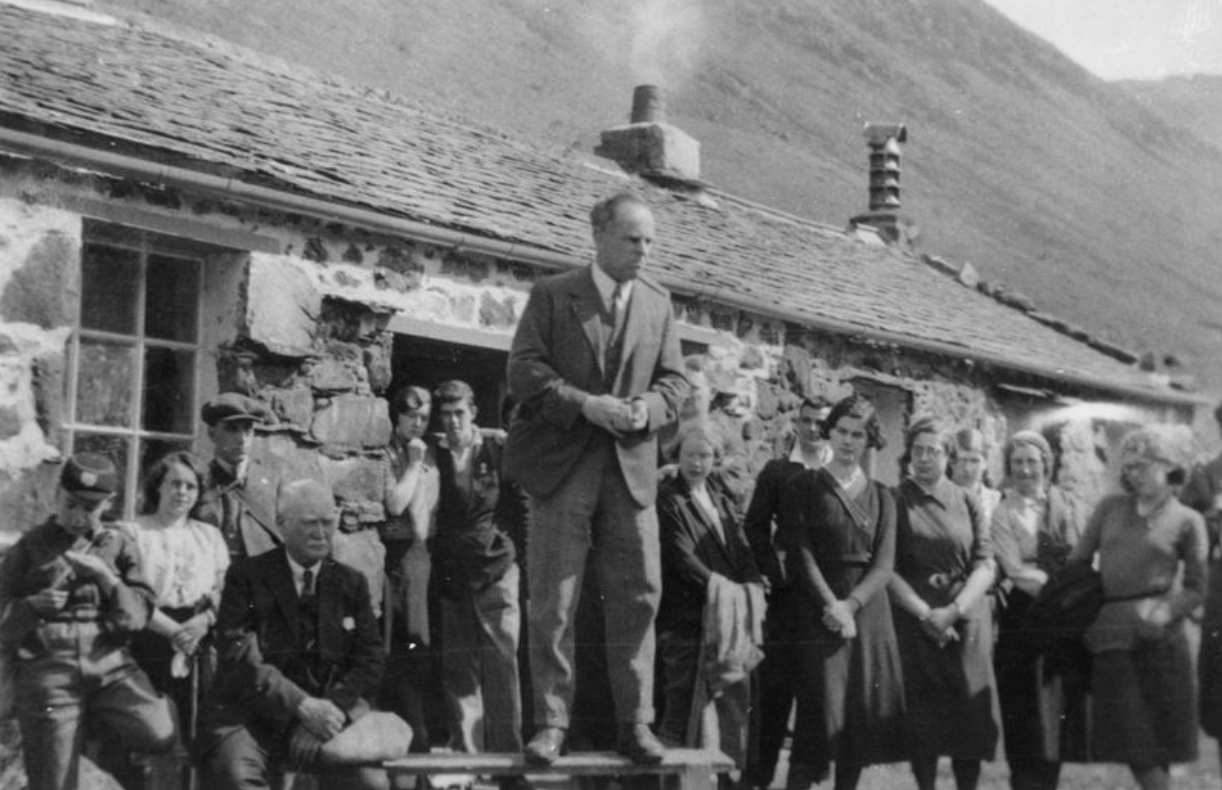
So, how has it changed? There was a shift in the 1940s and 1950s, and I think this is partly because the people who were relatively young, e.g., in their thirties, when YHA was founded, had stayed involved through the war and were by this point in their fifties. There's an interesting issue about membership organisations and membership renewal here.
Going back a bit, we were very involved in the foundation of the National Parks Movement in the late 1940s. So we, the Open Spaces Society, the Ramblers, what's now the Campaign for National Parks, and CPRE, were the five organisations who commissioned the 1945 Dower Report that led to the foundation of national parks in 1949. [Today], the CEOs of those organisations continue to meet three times a year and lobby the government to take national parks much more seriously. Another example is the Cleveland Way on the North York Moors National Park, designed to join a number of YHA hostels together in a long-distance walking trail – something designed by the local YHA group at the time.
Gradually, this countryside access movement strengthened. In YHA, we ended up having a national countryside committee that lasted about 30 or 40 years. The people involved in the leadership of YHA got really interested in that movement, in countryside conservation and national park protection. That became the dominant force – even when I was on the YHA Board 25 years ago – rather than social reform or education. Through our strategy over the last ten years, I've tried to move us back closer to the social reform route because when I started, I worried that we had lost touch with what our original mission was.
Another factor is that, unlike when we were founded and there was effectively no budget accommodation, in the late twentieth century and early part of the twenty-first century, you started to have other cheap hotels and cheap air travel to Europe, so the competition starts to increase, both for independent trips, but for school trips as well. And that obviously accelerated through the last 20 or 30 years with Premier Inn, booking.com, Airbnb. 90% of our income comes from trading, so we need to compete in the private sector, in a competitive market.
My immediate predecessor spent a lot of her time modernising YHA – rationalising contracts, consolidating the YHA estate, and making sure the organisation had an online presence. This was part of the drive for the organisation becoming more nationalised and professionalised. Back in 1930, YHA’s paid staff included the National Secretary Jack Catchpool and maybe an administrator. By the time I started, we had nearly 200 people in our head office (we don’t now, but we did then!).
JGF: What do you think a new movement for the Youth Hostel Association would look like today?
JB: At the moment, YHA as an organisation is under pressure like never before. COVID was a disaster for us, obviously, because we are all about sharing space, and could not do that for nearly two years. We lost 80% of our income in the first year, 50% the second year, 20% the third year. Fortunately, we didn't go bust, but what we had to do was two things.
First, sell high-value properties, such as St Pancras hostel in London, in order to keep our head above water, but that, of course, meant that we lost the trading income from those sites. The other thing we had to do was take on extra debt, which we could secure against our property assets.
But post-COVID, various things happened. Demand has never recovered; in fact, domestic tourism has dropped 5% in the last two years, partly related to the cost of living crisis. Then we had interest rates shoot up, and then energy costs – some of our hostels are in medieval castles or stately homes, where you can't do so much around energy efficiency. Then the living wage – I’m a massive supporter of it, but when you’re offering budget accommodation, you can't put your prices up to match the c.50% increases in living wage since 2019.
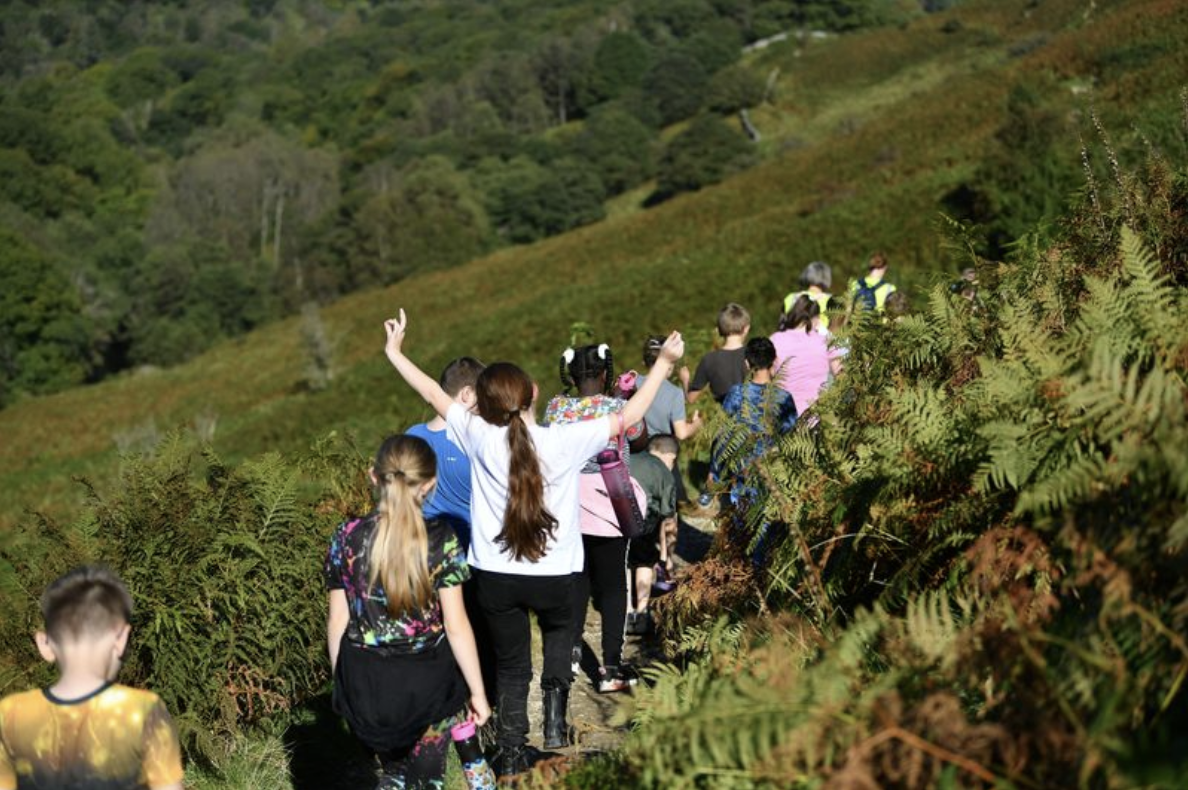
The new government's been very disappointing for us – the National Insurance increase was very challenging, as we have a lot of part-time staff who were previously below the National Insurance threshold. And with previous governments of all political persuasions, we ran various subsidised programmes for disadvantaged young people. The National Citizen Service was perhaps the best example of that – there were flaws in that programme, but it did give £1.2 million to YHA to subsidise disadvantaged kids to have a residential experience, and that has now been scrapped. In addition, DEFRA funding for our Generation Green programme, about connecting disadvantaged kids to nature, though lauded by this government, was not renewed. So actually we’re in the worst position for a generation in terms of subsidies.
Then we have the effects of Brexit, which has negatively affected school groups coming in from overseas. Post-Brexit, you now have to pay £16 for an Electronic Travel Authorisation. If you are at a disadvantaged school in inner-city Berlin, you are not going to buy your kids a visa waiver and a passport – they take them elsewhere. And the market in which we’re competing has developed. Private equity is backing school trip providers like PGL, and hotel chains and international hostel chains are entering the strong UK hostel market.
So what we've been trying to do is to find alternative models. The model we've been mainly trying to pursue is what we're calling a ‘partner model’, effectively a franchise, where we sell or lease buildings to local people in communities who then run them on a bed and breakfast model. This has been successful in keeping small hostels going, particularly the rural sites, while we modernise our core network and central services, ensuring that our hostels can appeal to both groups and individuals.
JGF: Historically, YHA relied heavily on members and volunteers, alongside elected governance, to run hostels and shape direction. How have responsibility and authority been divided between members, volunteers, elected trustees, and professional staff over time? How would you describe democratic participation within YHA today, and how visible is that to members?
JB: YHA has always had a strong democratic tradition with a membership. Until about 25, 30 years ago, we had locally and regionally voted-for representatives, and from those, representatives voted to stand for the National Council. At the National Council, now the AGM, there was a tradition of people putting forward motions which would be listened to, debated, and acted on in a very traditional way. Then – and this is before my time as chief exec, but I was part of it when I was on the board – what had started to happen was that regional council members were getting older, often staying on without being replaced locally, and that led to a democratic problem because the same people would get elected year on year. And people didn't necessarily vote for things that were in the interest of the association as a whole, but instead in the interest of their particular region.
Over a period of around 20 years, a series of incremental reforms were put in place, and the locally elected board became a national skills-based board. Trustees are still voted for by the membership, and they now all go through a nominations committee and interview process to ensure people have the right skills. There is now more of a sense of needing a diverse range of people on the board, including at least two young people.
There are fewer motions that come to the AGM every year, and those that do come can be very operationally specific – such as, why is the YHA shutting this hostel here? And generally, that – along with a demographic that attends AGMs that does not reflect YHA’s beneficiaries – leads to a reluctance from the board to re-invigorate AGMs.
I think one problem many organisations face is that they confuse three different things: governance/democracy, volunteering, and a social club. So members joined our regional councils for a range of different reasons: some because they liked doing some gardening in hostel X; they felt they were making a difference. Overlapping with that, people also volunteered because it was their source of social connection, and they would meet like-minded people. Then some of those people would say, ‘I want to have a say in the future of the YHA’. So we have these three different purposes, loosely aligned in these groups.
In a way, I think what should happen is to separate out those functions and give opportunities for all of those things to happen within YHA. So, if you're interested in governance, great – here's the route by which you can stand to the board, and hold the organisation to account. If you're interested in the social part of hostels, here are all the ways in which you can get engaged. And if you want to volunteer, that's terrific – here are the working parties that are going to be operating all the way through the winter in hostels. I think we've made good progress with that, but I think there are still some people who look back to the days when all three of those things were on a council.
JGF: Participation in YHA has always required time – whether volunteering in hostels, serving on committees, or engaging as an active member. How have changes in working lives, leisure time, and expectations shaped the kinds of membership and participation that are possible now? What do you think is more feasible now for the average member of society?
JB: It's partly about time and changing patterns of work, and I think it's also partly about regulation. My predecessors would put out an appeal: we need 500 people to come to a site in Surrey at 11:00 AM on Saturday and we're going to build a youth hostel. The idea of being able to do that kind of collective volunteering now is fanciful! What's the equivalent of that mass volunteering today, that we can get people really engaged around? We do have events, but it's not quite the same thing. What has worked well for us is the more structured volunteering programmes – over a third of our volunteers are now young people, and things like the Duke of Edinburgh scheme have really helped there.
One of the things we've struggled with a bit is the more organic kind of engagement process for members – especially younger members. How can you create something that is organic and more in tune with the nature of the social media world in which young people are living that might generate involvement? We've struggled to know how to facilitate that. One of the key measurements of our impact is belonging, which feels like a really important concept at the moment. That's what people are searching for.
James Blake has been the Chief Executive of YHA (England & Wales) since 2017. Before joining, he was Chief Executive of St Albans Council for nearly five years. He is currently non-Executive Chair of ACRE – Action with Communities in Rural England – as well as a trustee of a local music charity.