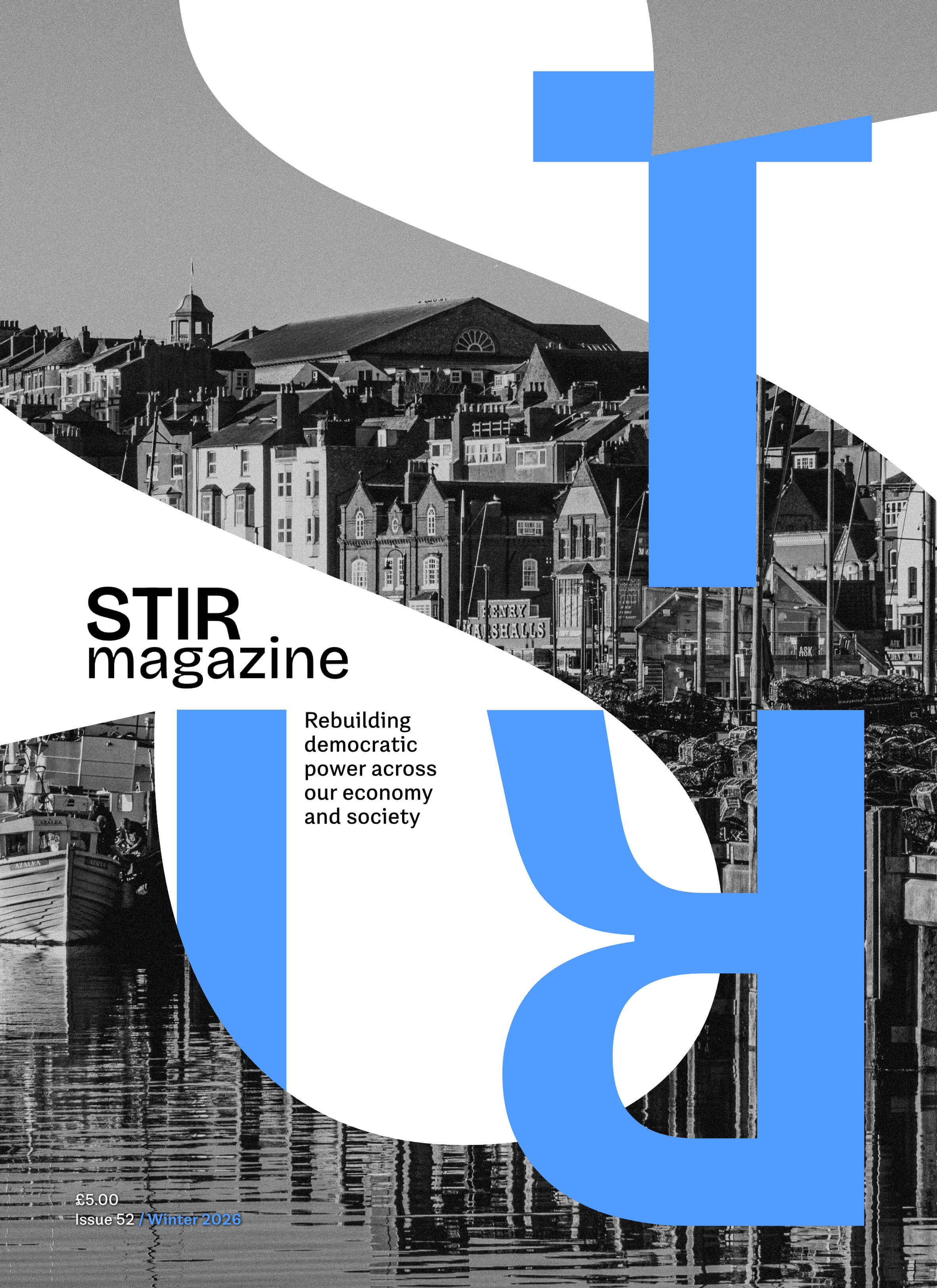
In this issue, we return to a question that has shaped our work since the beginning: what does it really take to revitalise civil society in a time when its institutions feel thinner, more professionalised, and more fragile than ever?
Across this collection, a shared concern emerges about how social life is organised – who owns it, who participates in it, and what kinds of power are being built, or lost, along the way. But beyond technocratic fixes to encourage ‘participation’, this issue addresses membership, ownership, and the everyday infrastructures that make collective life possible. They suggest that the health of civil society depends not only on good intentions, but also on the structures through which people are able to act together.
That question of ownership and agency runs through our exploration of coastal communities, where familiar stories of deprivation often mask deeper structural neglect. In Is revitalising social clubs part of the answer to “deprivation bingo”?, we look to member-owned social clubs as living examples of social infrastructure that has endured – not because of top-down intervention, but because they remain rooted in local membership, democratic governance, and everyday use.
History, too, plays a vital role in this issue. Our interview with Daniel T. Rodgers, alongside the excerpt on working-class club life in Hackney, reminds us that today’s debates about civil society, membership, and democracy are not new. They have been fought over before – often more openly, and with clearer lines of contestation.
Finally, the issue turns towards transformation: from community ownership of land and buildings through Platform Places, to Carly Trisk-Grove’s compelling case for Public Restaurants as a rediscovered form of shared civic infrastructure.
Taken together, these pieces point to a simple but demanding proposition: revitalising civil society is not about better language or smarter policy alone. It is about rebuilding institutions that people can belong to, argue within, and shape together – in places that are real, shared, and here to stay.
Subscribe to STIR magazine to read the Winter 2026 Issue and to access the entire archive of articles, interviews, profiles and more via Exact Editions.