

JGF: Your book Radical Space argues that political theory has often overlooked the “power of places”, tending instead to privilege time and language in explanations of political transformation. What does focusing on space allow us to see that more conventional political histories miss?
MK: One thing I like to emphasise is the importance of what I call the ‘visceral register’. So this could include a lot of things, including emotion, body language, affect, and the precognitive dimensions of judgement. I think these are very important for how we relate to people and, ultimately, also political action. It's not the only way in which space or place can have an impact. There's also the more conventional understanding: if you look at symbols in the church, for example, you might have some sort of material depictions of ecclesiastical power. But what I'm really interested in is the way in which it stages encounters between different people.
There is also what I call the ‘phatic dimension’. This is the part of communication that is about maintaining social connection rather than just exchanging information. And I think all encounters have some sort of phatic dimension. But when we focus exclusively on language, I think what we really miss is how popular power operates.
Could you talk a bit about identity formation – what power does space have in that process that might not exist outside of particular spaces and buildings?
Well, I wouldn't say that it's unique, but it's an important site that's been overlooked. When I wrote this book 25 years ago, there was a great deal of emphasis on the Habermasian understanding of the bourgeois public sphere. This was initially something that was located in coffee houses and physical spaces, but as deliberative democracy was developed, it came to take the form of abstract reflections on morality and debates about ethics, so a bit of this rootedness in physical places was lost. And I think that's where we recognise the importance of coming together and the types of encounters that it facilitates. So think, for example, about the difference between reading a newspaper article and being in a demonstration or in a crowd. There's a sense of solidarity that comes through that physical encounter, and it's distinctive. I wouldn't say that it is more or less important, but it's overlooked and a dimension that we should be more attuned to.
One of the key arguments that Habermas makes is that the really distinctive judgements that citizens reach are only possible if they have a private space to retreat to. What we think of as the public sphere rests on the bourgeois standard of living, which allows you to reflect by yourself – and it’s in this way you can have a more unique insight. I was interested in thinking about what happens when you don't have that, when you're living in crowded conditions, when your life is much more collective, when you're working in a factory and you're not reflecting by yourself. And that leads to a different understanding of how it is that we connect.
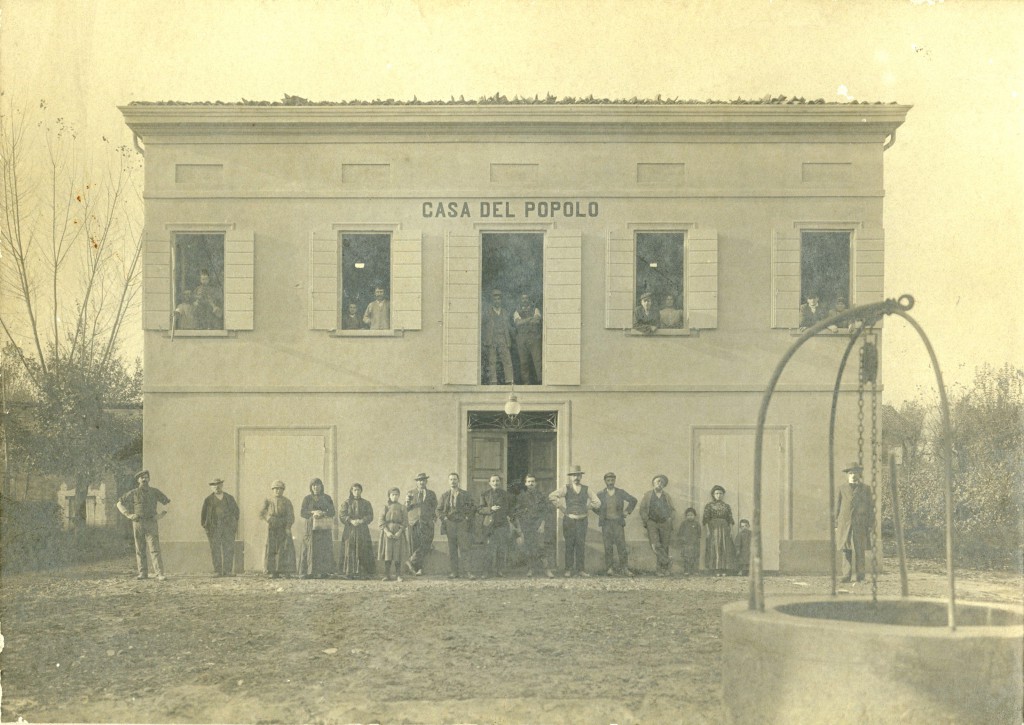
All of this is also ultimately rooted in Marx's idea that class consciousness develops when we encounter people in the factory. But then what about when there's not an economy that's based primarily on factory employment? There were of course some big factories in Italy, but it was overall a much more agrarian and rural country. And so a lot of these Case del Popolo (Houses of the People) that I wrote about were rural organisations, and they were rooted in pre-existing communities, but could also be sites of politicisation and organisation.

I’ve just read The Shadow of the Mine by Huw Beynon and Ray Hudson about the coalfields in Britain, and it’s so easy to forget that those mines were mostly in rural places. And, for the best part of a century, they were also home to some of the most militant political organisations in the country: small villages and towns with modest social infrastructure – mostly working men’s clubs and miner welfare halls – built around the pithead. Beyond agriculture, it’s another fascinating example that breaks out of what you call the “logic of the factory”.
You engage with critiques of communitarianism that see attachment to place and local space as inherently conservative – spaces where inherited or “pre-political” loyalties are more likely to dominate than the formation of new political ideas and relationships. Can you outline your objection to this critique and try to explain why it is so persistent?
Well, I think things have changed quite a bit in the last 25 years. The academic debate between liberals and communitarians was the prominent debate in political philosophy for a long time – much less so today. There's less of that worry about community being reactionary. I think we're actually facing a somewhat different problem today, which is the disappearance of community and people starting to recognise the costs of that loss, and what we can do to rebuild it. The division between Gemeinschaft and Gesellschaft – a more rooted local community and a more cosmopolitan community – is much less important than it used to be. And instead, the primary challenge that we're facing is having any community. Of course, this is partly because of social media and the way in which we rely so much on virtual interfaces to connect. We can talk to people who are very far away, but it does have a cost, I think, in terms of people's ability to have face-to-face connections and the ongoing iterative interactions that directly anchor social people.
So bringing this to Italy, your book focuses specifically on the “microspaces of resistance” that emerged in Italy between national unification and the rise of fascism. Over time, many of these sites – often known as “houses of the people” – evolved into what you describe as “geographies of power.” Could you briefly sketch the historical context of this period, and explain how these deeply local spaces came to play such a significant role in shaping wider political conflict and transformation?
Italy as a country unified quite late, in 1861, and it never had a very strong unitary culture. There are very different dialects, and it had been politically controlled by different regimes and monarchies throughout history, so there was never a very strong sense of an identity as one nation. This meant there was a lot of decentralisation of power to the local level. People like Robert Putnam say that this dates back to the Renaissance and to the Italian city-states. And out of that sense of local autonomy there was a lot of opportunity for experimentation, and different cultures developed in different parts of the country, but in Tuscany and Emilia-Romagna, there was an opportunity to develop what I call “red subculture” – a way of linking politics and everyday life. This red sub-subculture developed in a broader, more impactful way in the 1960s and 1970s. It was an attempt to have a completely secular cultural identity filled with rituals and festivals that cemented it in the visceral register, which I talked about earlier. It was a site of meaning that was close to rivalling that of the Catholic Church, in some ways, and was very successful at doing that. That built a great deal of trust that made it possible for collaboration at the local level and led to an economic vitality that cemented this model as an alternative form of economy. And the Houses of the People were a big part of that. A lot of co-operatives started there. There was a set of institutions and connections, and an informal exchange of information that made it possible for people to pursue a radical political change in a way that involved a fair amount of collaboration and compromise, and a bit of pragmatism also.
One of the interesting differences between Britain and Europe was, of course, the Reformation and the earlier emergence of secular sociability here. The Evangelical Revival had a strong relationship to literacy and working-class intellectualism; people wanted to read the Bible and interpret it for themselves, and then this transferred to secular texts. Peter Clark’s British Clubs and Societies, 1580–1800: The Origins of an Associational World talks at length about the differences between England and Europe at the time, particularly the fact that there was simply more secular social space here. And that, in part, explains the earlier development of a wide range of associational clubs and organisational forms.
At this point in Italian history, those political spaces – and the alliance with communism and so on – are beginning to break away from the church, creating more room for institutions like the Houses of the People.
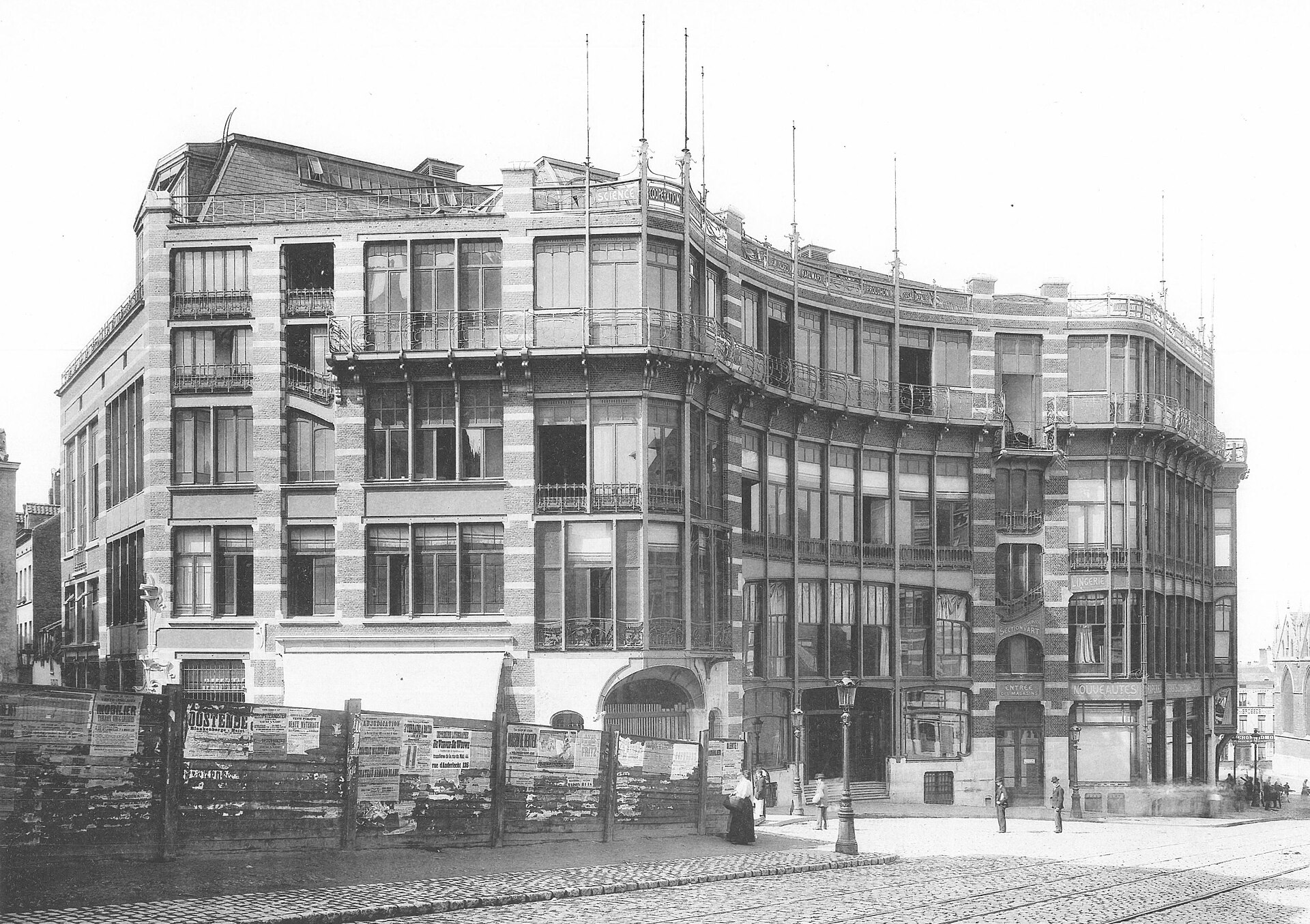
Yes. And keep in mind, most of these Houses of the People were very modest structures. Italy was a very poor country, and these were vernacular architecture. I write about the Victor Horta Maison du Peuple [in Brussels], but most of the Houses of the People are really nothing like that. They are local community centres where people encounter their neighbours, have political conversations, and make plans.
Robert Putnam generously shared some of the data from Making Democracy Work, and then I gathered data about the density of associational life in the red subculture versus the white subculture, which is the Catholic subculture. And so the statistical analysis suggested that the correlation really only extends to the density of the red (socialist and communist) subculture, and not to the Catholic one. Which means that we have to consider other possible explanations than the one that he offers in his book – the idea of trust. There is trust that is built in these Houses of the People, but they also need a certain amount of distrust. At least this is my hypothesis, that in the communist subculture, there is more willingness to challenge the local power structure and the elites, to not just accept what they said was going to be in the interest of everybody, and to fight for more radical alternatives. And that was linked to a certain subculture, not just associational life in general but a form of associationalism that was oriented towards equality and dispersion of power.
So how do these Houses of the People, in whatever form they take, become geographies of power during this period? Is it clear how they have influenced national and regional politics at the time? What historical role are they playing during the period, and how does that change? How do they actually become powerful?
I think one factor is decentralisation, as I was talking about earlier. There wasn't as much state capacity in Italy as in maybe other countries in Europe or in the UK, which meant there were opportunities to organise and experiment, which is not always possible. As you mentioned in talking about the working men's club in the UK, these evolved from a more organic club movement, to a largely charitable union controlled by patrons, to an eventual 'revolt against patronage' which democratised the clubs and the union. We don't see that happening in Italy. There are of course alternative forms of associationalism going on, such as Catholic associational life. I think there was a slightly anarchist tenor to the way things were done, in part by necessity, in part by ideology. And that meant that you could experiment. I think you try different things, some of them work, and then you learn from them. And so that's how we learn how to build power, by seeing what works, and through experimentation; and that is more or less the way these things were built, not from abstract theory, but from experimentation and practice.
Is there any direct link between those organising through and socialising in these places and any particular national events, or is it just generally that those people maybe become party members by virtue of going to these spaces? Or they become politically active even outside of parties – they set up or join co-operatives and are part of an economic democracy movement?
I would point to the founding of the PCI, the Partito Comunista Italiano, after the Russian Revolution. This led to a split between the Socialist Party, which became more of a reformist party, and the Communist Party. That division would be the one that would imprint the subsequent development of these movements in important ways. Antonio Gramsci, a founding member of the Communist Party, developed the theory of hegemony, and this is really very much alive with this idea of the Houses of the People, which is that if you're building a new popular culture and you want to have leadership, not just of the working class, but of other potentially allied classes, you have to find things that you have in common. You have to have these relationships and practices that bring people together and share ideas. And so it was necessary to have a flourishing Communist Party in a situation where it was challenging to do that. I think you're absolutely right in pointing to the co-operatives as an important anchor for this. Not to say that all co-operatives were associated with the communist movement. There were Catholic co-operatives also, and ones that were more independent. But it sustained the connection between people and the party, and that is, I think, the core of hegemony, the idea of a form of leadership that genuinely includes people by listening to and incorporating their aspirations insofar as we don't have a fundamental class conflict.
It’s very interesting to look across Europe – in Romania, co-operatives were state-sponsored; in Spain, they were church-sponsored; but in Italy they were much more autonomous. So the influence seems to vary in strength depending on which part of Europe you look at and at what particular moment in time.
And of course, Britain also has a very strong tradition of Christian socialism. Many Christian socialist ministers here were actively lobbying for co-operative legislation. Henry Solly, for example, founded the Club and Institute Union. He was a Christian Socialist who lost his ministerial role within the Unitarian Church because of his Christian Socialist politics.
It's actually quite similar in Italy. After World War II, when they wrote the new Italian Republican Constitution, co-operation was in the constitution – it’s given legal benefits and recognised as an important part of the structure of the Italian state. It was also understood as an alternative to class conflict. ‘This is something that we could do together that would be productive’. That is, I think, one of the reasons why it was able to flourish, because without some support from the state, it is very difficult. They're not taxed on the resources that are kept internal to the firm. Small differences are really crucial for them to be able to compete against capitalist firms.
Recent critics of “hyperpolitics” have described the present as a “story of disorganisation” – a period marked by the collapse of the formal and informal institutions that once gave radical political movements durability, identity, and strength. But should we also understand our current period as a story of dislocation? One in which politics has become detached from the physical spaces, routines, and infrastructures that once embodied collective life and allowed individuals to engage with politics at the level of everyday life?
Thinking about the structural transformation of the public sphere, Habermas, writing in the 1960s, says there is no more real public sphere; it's all just mass culture and consumerism and spectatorship, and there isn't really an opportunity for people really to be political agents. And then Putnam says it's getting worse, but we still have some social capital. Now we have, I think, even less. So we've had this long story of decline going from the 1960s to the 1990s till today. So what does that mean? Does that mean that there's no hope? I was also thinking about this in relation to the dissertation of a PhD student that I'm working with, which references the community centre movement in the United States and the idea that this should be reanimated, and why it's so difficult to do that even though so many people believe that we need these forms of connectivity between neighbours. And I think that there are obvious reasons for that. One thing is just the cost of land. When people in these small villages in Italy were building houses of the people, with their own labour and vernacular architecture, it wasn't necessarily that costly, whereas now with hyper-commodification and a much more urban society, most people are in areas with very high land values.
Then women are working outside of the home, people are working more hours, and so the time to devote to these communal activities seems to be less. That, I think, is something a lot of people are regretting, but there are these structural reasons why it's not an easy fix at all. That being said, I agree with what you mentioned about these organisations that are popping up and I see that in San Francisco. The Democratic clubs don't usually have clubhouses; they're not really houses of the people with different functions – recreational, social, artistic – but there is an attempt to develop things like this. In San Francisco, there are ‘Cultural Districts’, which are sort of located in space, but also sometimes related to ethnic groups or shared histories. So that brings people together. They are very active in talking about politics and in mobilising around ballot initiatives. And so we see new forms of organisation and mobilisation through social movements that are another way in which co-presence is still an important and effective mechanism of building power.
Given that “stone and mortar are particularly potent symbols "[and]" monumental buildings such as churches or palaces can convince both allies and enemies of a group’s strength and power,” it’s clear that architectural choices are politically significant. In the same era, like in Italy, Britain’s working class built its own ‘cathedrals’ – working men’s clubs and miners’ institutes – to not only demonstrate its existing power but to project its ambitions for the future.
How important is architecture or the built environment in shaping collective confidence and political aspirations?
I think there was a great deal of variety in smaller towns, with some more modest structures and more affluent urban areas with more resources. I was also interested in the way in which a lot of attention was given to Michel Foucault's panopticon, and the idea that you have this disciplinary power that operates through being observed, and that you could have a centralised power. When I was looking at the actual architectural plans of Houses of the People, it seemed like the opposite. It was about inviting people to congregate in different ways, and to also have some flexibility. Sometimes you do need a little bit of privacy or a smaller room for people to meet. But you would have different types of encounters, and these are facilitated through the design of space – which is not always through an architect, but instead people adding on different buildings or rooms or structures as they were needed for those types of encounters. And so that's how I see architectural work.
Finally, in today’s society, it feels as though the absence of physical spaces is being rediscovered as a problem by a younger cohort of activists. In your view, what arguments should we make for both revitalising existing, and creating a new generation of, physical spaces – in terms of the labour movement, localism, and even national democracy?
I think the issue is it's not a normative argument. It's not saying that there is this requirement of justice to do it, and that's what makes it hard to summarise. I think it comes more from the bottom up, that people yearn for this, and that we're seeing the loneliness epidemic and this sense of isolation. I don’t want to be too dramatic, but Durkheim said the way we know that anomie is happening is because of a high suicide rate, and suicide rates are increasing. So we're seeing evidence of the need for this. And so I think it's, ‘build it and they will come’. We have to not make arguments, but make places.
∞
Cover image: Casa del popolo in Disvetro, built 1910-1911. It was the headquarters of the Unione Cooperativa di Consumo fra gli Operai di Villa Disvetro (Workers' Consumer Co-operative) / Photo in the public domain (1911)
Margaret Kohn is an author and professor of political theory at the University of Toronto. Her research interests are in the areas of the history of political thought, critical theory, social justice, and urbanism. She is the author of Radical Space: Building the House of the People (Cornell University Press 2003) and her most recent book The Death and Life of the Urban Commonwealth was published by Oxford University Press (2016).



_(destroyed,_Brussels),_exterior_3_(cropped).jpg)
